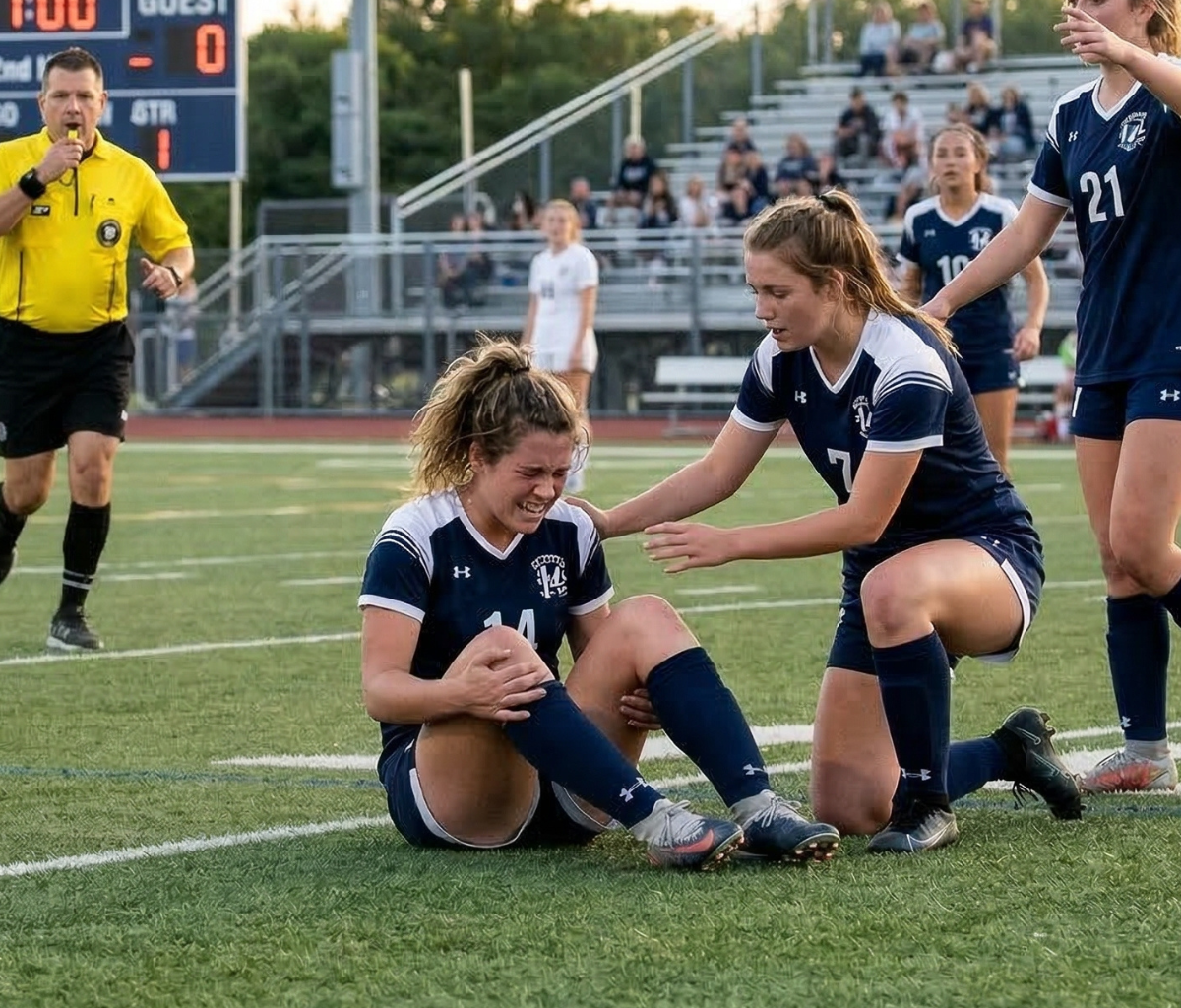
Nineteen. That’s how many ACL tears one soccer team tallied among current and former teammates. Female athletes tear their ACL at 3-6 times the rate of males in the same sports, and injuries among girls in US high schools jumped 32% over just 15 years.
The frustrating part? Prevention programs cut this risk by 50-80%. Yet less than one-third of youth players follow any prevention protocol. The science is clear. The gap between what we know and what we do is where careers end.
Why Are So Many Teen Girls Tearing Their ACLs?
A recent New York Times investigation found that year-round soccer players face more than a 1-in-6 chance of tearing their ACL before finishing four years of high school. Those who return after surgery face a 1-in-3 chance of a second tear.
The numbers paint a stark picture. In Norway, ACL surgeries for teens rose over 40% in 16 years. In Britain, reconstructions among teens increased almost 30-fold between 1997-2017. At least 100,000 ACL surgeries happen annually in the US, with actual ruptures likely double that number.
Female athletes face unique biomechanical disadvantages:
- Smaller ACL pathway: The notch in the femur is narrower in women
- Hip structure: Wider hips and shorter thighs create more knee strain
- Hormonal changes: Menstruation can make ligaments looser
- Movement patterns: Girls’ knees turn inward more during quick movements
- Training gaps: Boys get introduced to weight rooms earlier
But biology isn’t destiny. The real culprit is how we train young athletes today.
What Changed? The Movement Crisis
Modern youth sports created the perfect injury storm:
Less Free Play:
- Kids compete with TikTok and Minecraft instead of playground time
- Fewer jungle gym scrambles and obstacle course building
- No neighborhood tag games or pickup sports
- Reduced movement diversity outside organized practice
Early Specialization Problems:
- Year-round training with no seasonal breaks
- Single-sport focus eliminates movement variety
- “Lack of movement diversity, lack of sport diversity” creates injury risk
- Bodies adapt to repetitive patterns without building resilience
When researchers videotaped over 16,000 adolescents doing basic squats and jumps, most failed to land with proper neuromuscular control. The movement foundation is crumbling.

How Devastating Are ACL Injuries?
An ACL tear changes everything. Surgery plus grueling rehab sidelines athletes for a year or longer. High school sophomores shouldn’t contemplate getting arthritis in their 30s.
Immediate Impact:
- Missed seasons and lost development time
- College scholarship opportunities vanishing overnight
- Surgical reconstruction plus 9-12 months of rehabilitation
- Mental health impacts including depression and anxiety
Lifelong Consequences:
- Chronic pain and swelling
- Early-onset osteoarthritis (10-15 times higher risk)
- Increased cardiovascular problems from chronic inflammation
- Many athletes never return to pre-injury performance levels
The human stories behind the statistics are heartbreaking. Girls who tear their ACL at 12, rehab for 13 months, then tear the other knee. High school careers finished before they can drive.
Why Don’t Teams Use Prevention Programs That Work?
Prevention protocols exist. They work. Studies across male soccer players in Nigeria, female field hockey in Australia, female handballers in Norway, and women’s basketball in Japan show 50-80% injury risk reduction.
The most-studied sports medicine intervention in history proved that 20-minute workouts three times per week cut ACL tears by more than two-thirds among 3,000 female teen soccer players.
So why the implementation gap?
Awareness Problems:
- Most youth coaches don’t know prevention strategies exist
- Parents have no idea these programs are available
- Clubs reward coaches for winning, not injury prevention
- Youth sports have no unified governing body pushing prevention requirements
Training Prioritization:
- Teams focus on skills and tactics over movement quality
- Prevention exercises viewed as optional add-ons
- Time constraints during packed practice schedules
- Some coaches believe ACL injuries are unavoidable bad luck
College teams that do ACL prevention actually win more games because more players stay healthy throughout the season.
What Does Effective ACL Prevention Look Like?
Prevention programs target the root causes of ACL injuries through systematic training approaches.
Strength Development:
- Hip and glute strength to control knee position during cutting
- Hamstring strength to balance quadriceps dominance
- Core stability for better overall body control
- Single-leg strength training to address imbalances between sides
Movement Quality Training:
- Proper landing mechanics with bent knees and hips
- Controlled deceleration techniques for sudden stops
- Cutting and pivoting with good knee alignment
- Jump training emphasizing soft, controlled landings
Year-Round Conditioning:
- Maintaining fitness during off-seasons prevents early-season injuries
- Progressive strength building before intense sports activity
- Balance and proprioception training for knee stability
- Sport-specific movement preparation
The key is consistency. Programs work when implemented 2-3 times per week throughout the year, not just as pre-season add-ons.
When Should Prevention Training Start?
Prevention works best when started before problems develop. The most effective window opens around age 10-12, right before the biomechanical changes that increase injury risk.
Ages 8-12: Foundation Building
- Basic body awareness and balance skills
- Simple jumping and landing pattern development
- Fun, game-based activities that build coordination
- Introduction to proper squatting and lunging mechanics
Ages 13-16: Skill Development
- Sport-specific movement pattern training
- Progressive resistance strength training
- Advanced balance and reaction training
- Formal injury prevention protocols 2-3 times weekly
Ages 17+: Performance Integration
- High-intensity plyometric training programs
- Complex movement combination training
- Competition-specific preparation protocols
- Maintenance programs during competitive seasons
Athletes who maintain year-round conditioning show dramatically lower injury rates than those who take extended training breaks between seasons.
How Athletic Republic Addresses the ACL Crisis
Athletic Republic programs directly target every factor that contributes to ACL injuries in female athletes. Our evidence-based protocols combine 30+ years of performance data with the latest prevention research.
Comprehensive Assessment:
- Biomechanical movement screening identifies individual risk factors
- Strength testing reveals muscle imbalances before they cause problems
- Balance and stability evaluation pinpoints coordination deficits
- Sport-specific movement analysis addresses activity demands
Targeted Training Protocols:
- Neuromuscular control exercises improve knee stability during cutting
- Hip and glute strengthening prevents knee collapse during landing
- Hamstring development balances quadriceps dominance patterns
- Plyometric progression teaches proper jump-landing mechanics
Year-Round Programming:
- Off-season conditioning prevents fitness gaps that cause early-season injuries
- In-season maintenance keeps movement quality high during competition
- Post-season recovery and regeneration prepares for the next training cycle
- Age-appropriate progression ensures safe advancement through development
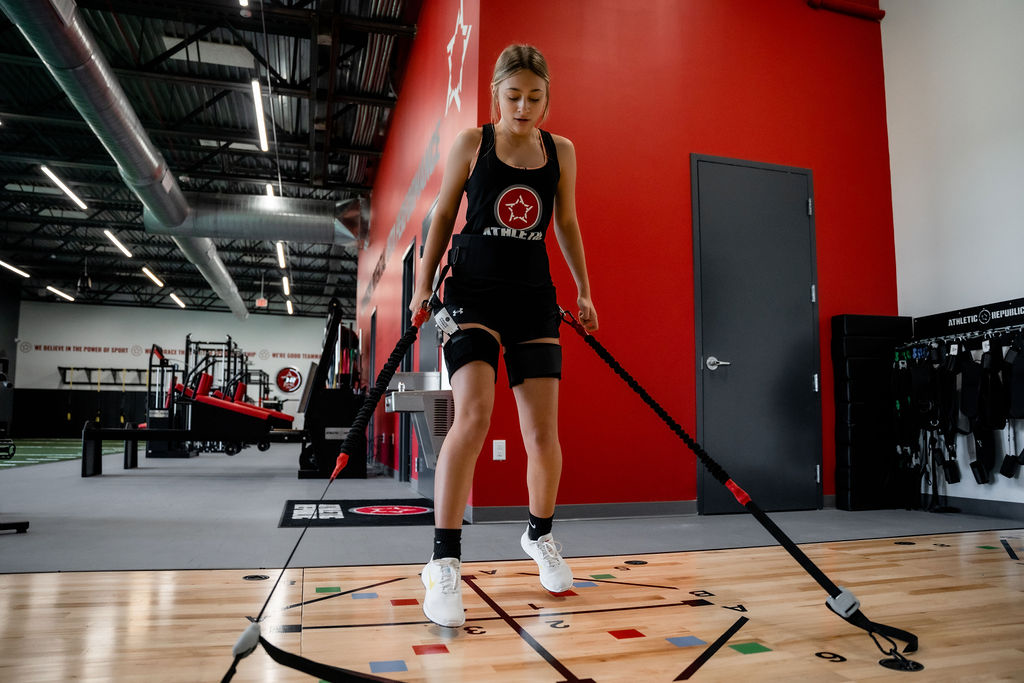
Athletes completing Athletic Republic training show measurable improvements in landing mechanics, strength ratios, and movement quality. These improvements translate directly to reduced injury risk during competition.
Our sport-specific approach means a 13-year-old soccer player receives different training than a 17-year-old basketball player, but both benefit from proven prevention strategies that address their individual needs.
Frequently Asked Questions
How effective are ACL prevention programs?
The American Academy of Pediatrics (AAP) recommends neuromuscular training, specifically plyometric and strengthening exercises, to reduce ACL injury risk in young athletes by up to 72%. Key prevention strategies include core, hip, and hamstring strengthening, improving landing techniques, avoiding year-round single-sport specialization, and ensuring proper rest to prevent fatigue.
What age should girls start ACL prevention training?
Prevention training ideally begins around age 10-12, before the biomechanical changes that increase injury risk. However, athletes of any age benefit from proper movement training and strength development.
How often should athletes do injury prevention exercises?
Research shows the best results come from 2-3 prevention sessions per week, lasting 20-30 minutes each. These can integrate into regular practice or function as separate training sessions.
Can prevention training improve performance too?
Yes. Strength, balance, and movement quality improvements that prevent injuries also enhance speed, agility, and power output. Athletes often see performance gains alongside injury risk reduction.
Why don’t more teams use prevention programs?
The biggest barrier is awareness. Many youth coaches don’t know these programs exist. Time constraints and the false belief that ACL injuries are unavoidable also prevent implementation.
How long before athletes see prevention benefits?
Most programs show measurable biomechanical improvements within 6-8 weeks of consistent training. However, injury risk reduction requires longer-term commitment to maintain improvements throughout the athletic career.